Five questions you didn’t think to ask your photographer (But really should)
Five important questions to ask your photographer before you event or wedding and how I answer those questions!

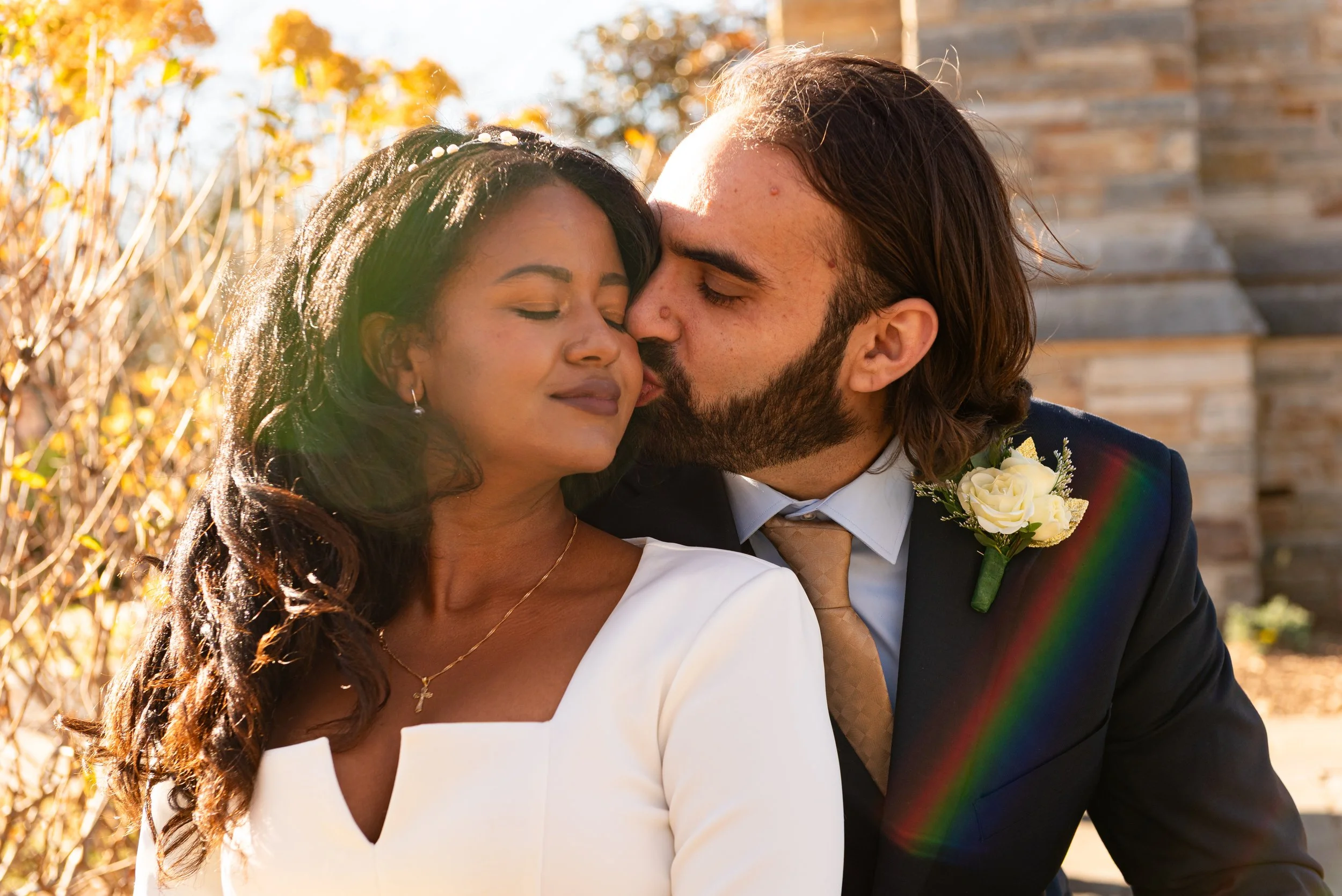
The groom, his mother, and sister watch the bride and her father walk down the aisle.
Okay, you have a wedding or big corporate event, or need to get a portrait taken and are ready to book and you begin to google search for “photographers near me” or you are searching hashtags on instagram but there are just so many options and its hard to separate the truly professional from the simply talented. That professionalism is important when you are dealing with a one time event and need everything to go right!
Now I come from a big family - a really big family, so when anyone of my couple dozen cousins come asking about wedding photography I kindly tell them I would rather be a guest than working on their big day! BUT I will then give them this same advice when they begin their search for a photographer. So I hope this will help you feel empowered and confident when choosing your next photographer - even if thats not me!
What is your backup strategy?
This question is all about their reliability. A good photographer will tell you how they regularly network with a handful of photographers in the area in case they are sick or have to miss the day, etc. A professional will also tell you how they manage the digital files and what they do incase of a hardware failure. There should be at least one duplicate of everything at all times, from the moment they click the shutter to when they send you the images.
My Answer:
Both of my cameras have two memory cards, the second mirrors the first. When I get home, one card goes in a safe box on my desk where it will not be touched until the photos have been processed and backed up again, the other is the one I use to download to my hard-drive where the images will be processed. Once the photos are edited I upload them to your gallery, and backup to my external hard drive. At no point in time are there less than two instances of your photographs. I also have duplicates of all my flashes, lenses, batteries, and memory cards.
I have yet to miss a wedding or a photo date but in the unlikely occasion that I am sick or injured, there are 3 photographers in the local area I trust and will vouch for their talent. I have been working with them very closely for the last 5 years and know their style and workflow is similar to my own! If they all happen to be busy, I also network with a photographer group here in Baltimore and can reach out to them if necessary.
2. When can we expect to see the photos and how are they delivered?
Okay so this is probably the question everyone is eager to ask, but the “how” in this question carries a lot of weight! No one wants to wait six months for their photos (nor should they) anyone who is giving that sort of timeline is likely over booking themselves. As for the how, there are many different answers that could be given here. A mailed thumb-drive or CD is a less popular option now, most photographers likely have an online gallery where you can download or share. As long as they are giving specific answers here that you are comfortable with, you should be good!
My Answer:
Final images are delivered 4-8 weeks after your wedding date. You will receive an email with a link to an online password protected gallery where you can download the high res .jpg files and share them with friends and family! You or your family can also purchase prints of your favorite images if you so choose right from the gallery. The gallery will be available for 3 months, so be sure to download and backup. Once you have the photos downloaded, I recommend taking the same approach and always having two copies saved independently of each other.
3. What is your approach to posed vs candid?
You are really asking about a photographers demeanor when photographing. Some may be a fly on the wall, others may be more like a director. You should be comfortable with their level of interaction, but a good photographer will be adaptable to the situation!
My Answer:
For a majority of the day, I am sort of a fly on the wall. My goal is to document the day honestly because I believe with the amount of love and time you have invested into the event, it should not be overshadowed by any filter or interpretation on my end. That being said, I am not afraid to give guidance/advice to help your vision, its your event, not mine. When it comes to group photos and the classic posed shot, I am not afraid to project my voice and tell your Aunt Krissy to get in line! I have directed military generals, congressmen, and college students so when it comes to your family, I have no worries we can get them to stand still for 1/200th of a second.
4. Who owns the copyright and what are the restrictions on printing and sharing?
Copyright law can always feel daunting, and is often misunderstood, but this is something that will be written out in the contract so its a good idea to understand how they go about this. No photographer is going to give you the copyright to the image (unless you pay them a LOT of money) but thats okay! Because you don’t need the copyright to make prints or share the photos. There should be a written acceptable use policy the photographer grants you! Just make sure you understand and are comfortable with their answer, there can be room to negotiate here if necessary.
My Answer:
As the photographer, the copyright is automatically mine. The exact verbage which is embedded into all the photos, gives the client “a limited non-exclusive, non-transferrable, perpetual personal use license.”
Yes, thats a lot of scary sounded legal words but this means that you, and only you, are allowed to do whatever you want with the photos, as long as it does not involve making money off the photo. You can download them and share them online or with friends and family. You can make prints and display, even if its not through my print store and you can do this forever. If your vendors would like to use my photos, they will need to contact me directly for that permission. Now if your mom decides to get t shirts printed of your face thats fine (at least from a copyright perspective - though you may want to have a chat with her), as long as she doesn’t start selling them I am cool with it!
5. What is included in your pricing and are there any extra costs?
Budget Transparency is big! Especially if, like me, you decide to do like four major life milestones all within a year. I graduated college, found a job, bought a house, and got married all in the summer of 2019, lets just say the budget was tight for a minute. A good photographer will be up front and transparent about their prices.
My Answer:
Wedding rates: You can find my wedding packages at https://mikeguinto.com/couples. This will include shooting and editing time. Hourly rates are $350/hour
Travel: I do not charge for the editing time. If I am traveling more than an hour, I will add a $50 for every extra half an hour of travel beyond that for time/gas/mileage/parking. I do not charge extra for my return trip.
If the travel includes airfaire or extended travel, I can send you an estimate breaking down all the expenses.
Corporate rates: because event photography is so varied, I will send a project proposal/invoice catered to your organizations needs before any contracts are signed!
Print products: Any prints you wish to purchase are not calculated into the wedding packages, though the packages include a 15% discount off your first print order!
I hope this is a helpful guide to get you started finding your photographer! Remember that the best photographers are transparent, prepared, and aligned with your vision! Now that you are armed with the right questions to ask, lets talk about your event and see if we click! (pun intended)

Color Consistency Plagues Photographers
Professional photographers spend lots and lots of money in order to not be tricked by simple color illusions such as the one found here. The simple fact is, you can never guess what lighting condition your clients are going to view your photographs in but you can control the color that gets printed. And most phone screens and computer screens come calibrated to srgb pretty accurately now a days. When I am in the editing bay, I am constantly looking at my histograms because I know I can't ever truly trust my own eyes.

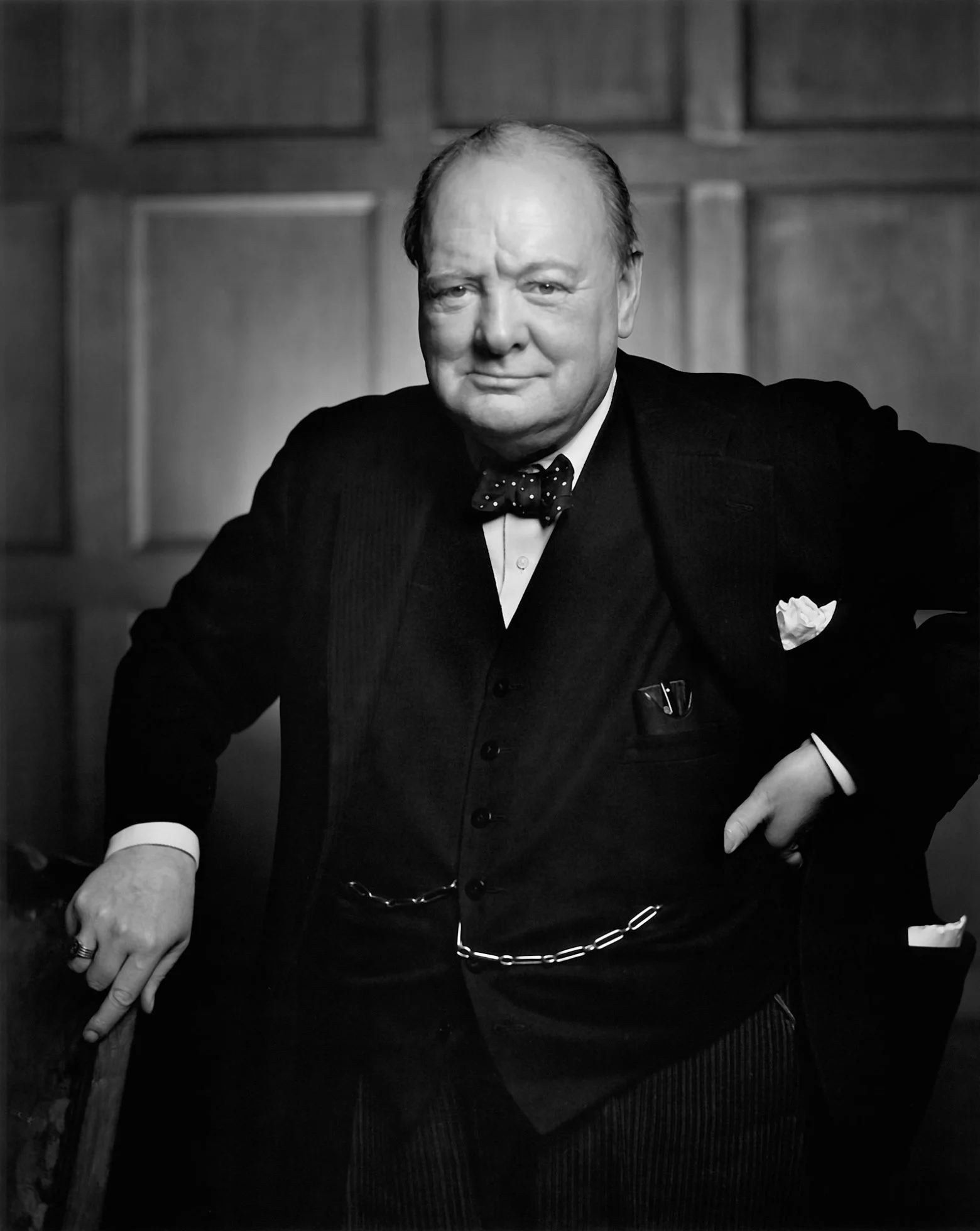
Yousef Karsh - Master Portrait Photographer of the 20th Century
By the time I got back to my camera, he looked so belligerent he could have devoured me. It was at that instant that I took the photograph."
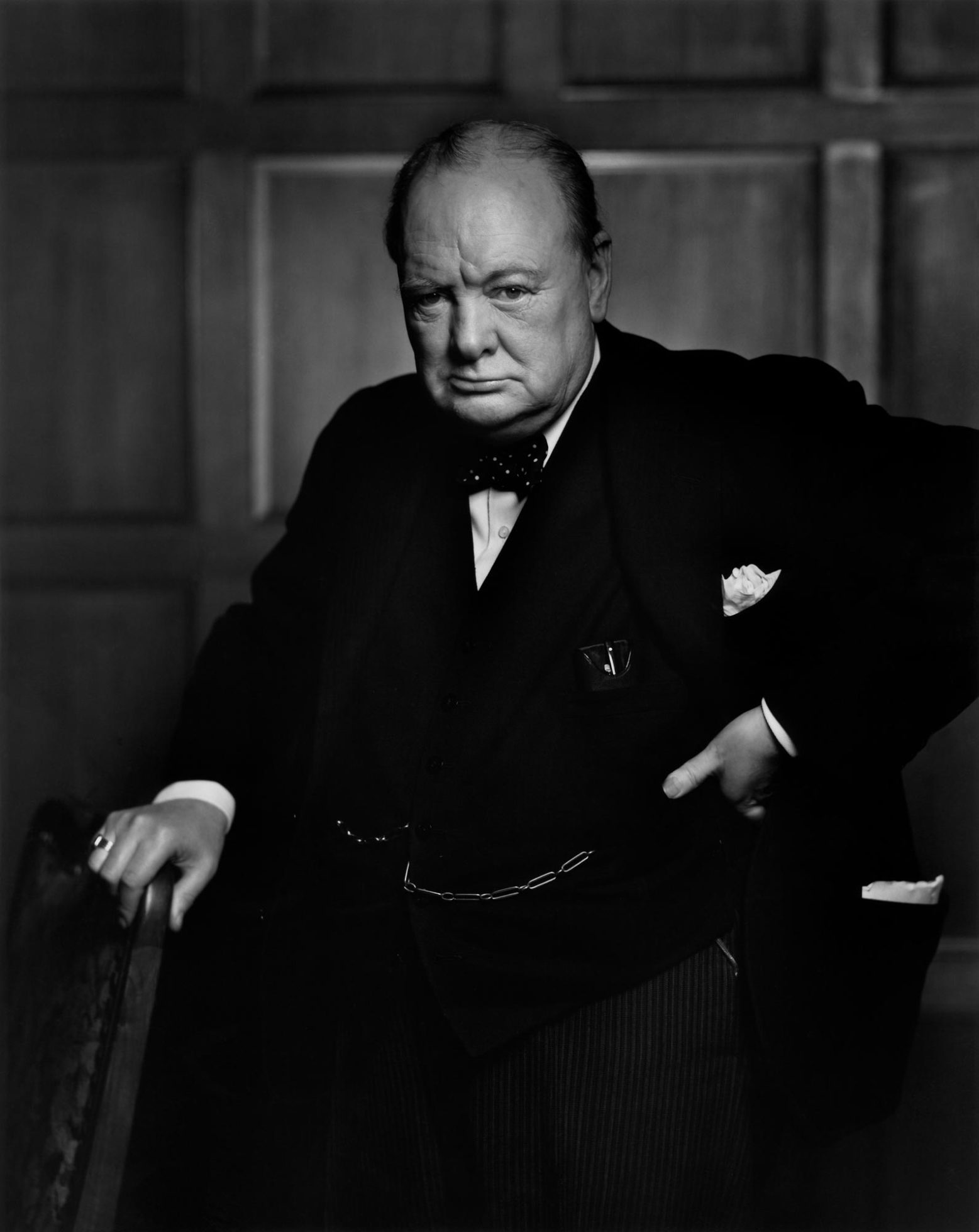
Yousuf Karsh, "Winston Churchill" Digital Scan of Photograph, 1941, http://karsh.org/photographs/winston-churchill
Winston Churchill was Prime Minister of the United Kingdom from 1940-45 and 1951-55. He is remembered by history as a strong leader, crass, and brutish. He was a bull dog of a man and chain smoked big fat cigars. This is however a photography blog, so we are going to discuss not the Englishman, but the Armenian immigrant who lived in Canada.
Yousuf Karsh was a portrait photographer in the twentieth century and one of my favorite photographers of all time. Karsh himself admits....
“My portrait of Winston Churchill changed my life. I knew after I had taken it that it was an important picture, but I could hardly have dreamed that it would become one of the most widely reproduced images in the history of photography.”
Churchill was visiting Ottowa, giving speeches to rally the world to the cause of defeating Hitler and Mussolini. You can listen to the highlights of the speech here.
Anyway, As Karsh explains the encounter, Churchill was being escorted by Canadian Prime Minister Mckenzie King and their entourages. Having no idea Canada was planning a photo op...
"I switched on my floodlights; a surprised Churchill growled, ‘What’s this, what’s this?’ No one had the courage to explain."
After timidly explaining he would like to create a portrait for the occasion, Churchill lit a cigar, began to puff, and relented.... "You may take one."
Refusing to give up his cigar, Karsh began double checking all the settings on his lights and camera and probably shaking a little under the pressure of getting it perfect in one shot. Karsh explains the rest of the story best....
"He continued to chomp vigorously at his cigar. I waited. Then I stepped toward him and, without premeditation, but ever so respectfully, I said, ‘Forgive me, sir,’ and plucked the cigar out of his mouth. By the time I got back to my camera, he looked so belligerent he could have devoured me. It was at that instant that I took the photograph."
Karsh is one of the most notable photographers of his time, creating portraits of Bogart and Bacall, the Apollo II crew, and Muhammad Ali, to name just a few. This photo he did for Ford of Canada is a testament to his compositional and lighting expertise. It is difficult to understand the amount of thought that goes into these photos unless you have taken one with a film SLR before.
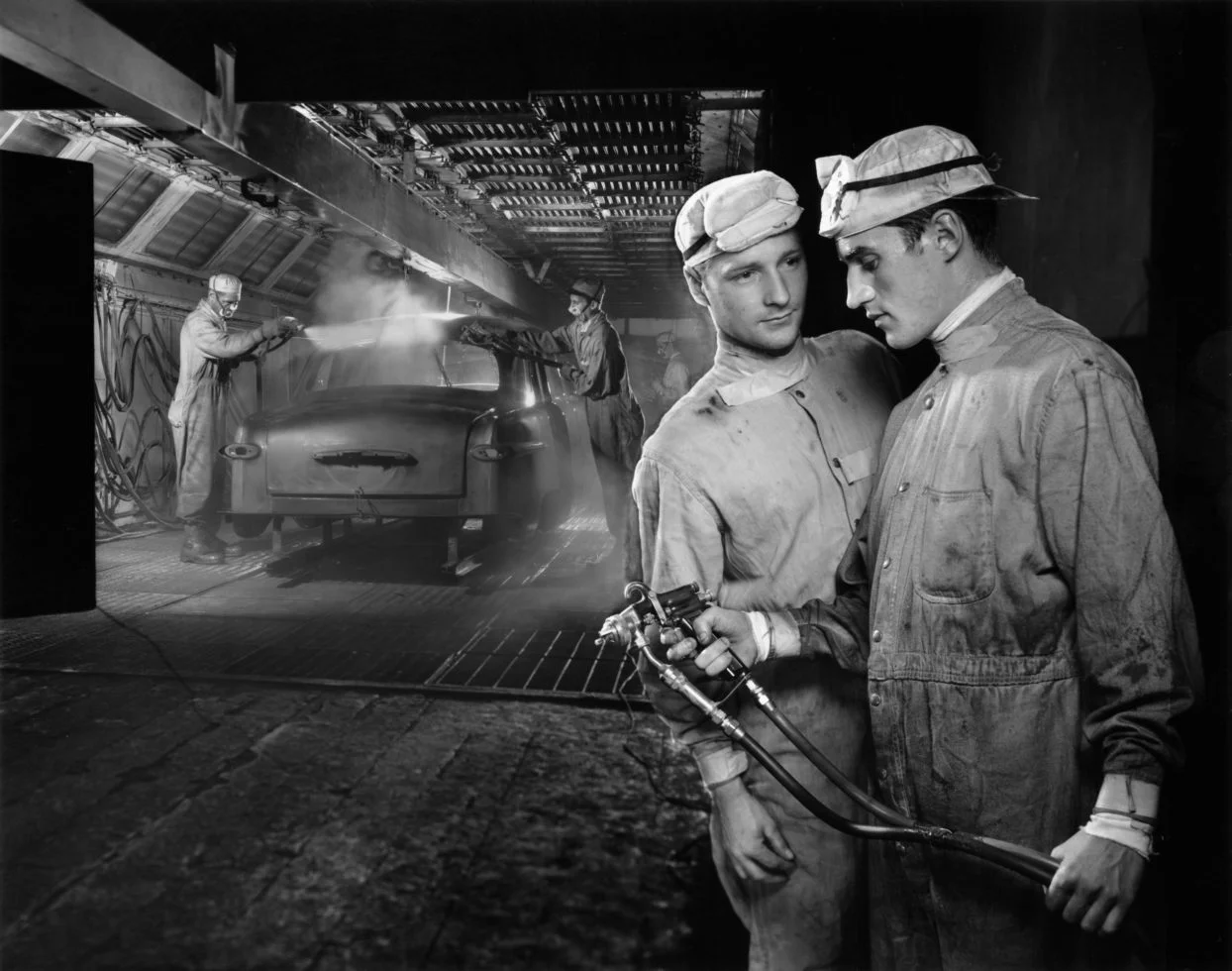
In general, Karsh's portraits can be described as simple but intimate. Each portrait he takes seems to capture the subject in an unscripted moment of internal thought. This is ever present in the hopeful stare of Martin Luther King Jr. the Civil Rights leader. You can also see it in Ernest Hemingway's detached stare into the distance, Muhammad Ali's confident smile, or Andy Warhol's playful gaze.


When you photography tells you capturing the essence of the subject in your photo, this is what they have in mind. Yousuf Karsh could write the book on photographing people. His style is simple and to the point, we can all learn a lot by staring at his photographs. His understanding of light, exposure, and his camera is nothing short of admirable.
Just remember if you work hard enough, you can move mountains. And if you're as good as Yousuf Karsh you can get the belligerent Churchill to smirk.

How a camera works
If you are interested in learning more about your camera or photography in general, comment below!
Have you ever wondered what makes that iphone camera of yours works so well? Have you ever wondered the differences between todays digital cameras and the old film SLR's used by our parents and grandparents? In this blog post we are going to tackle the science and early history behind how the camera actually does what it does!
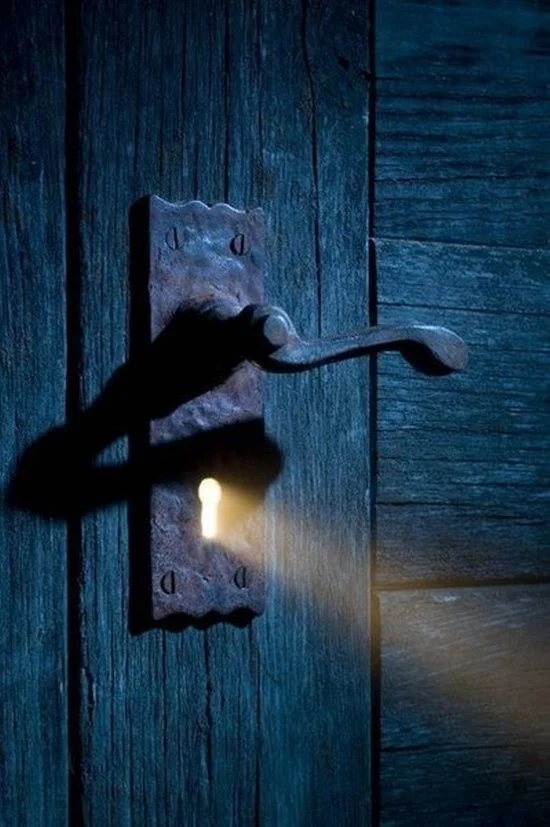
The first thing to know is that light moves in straight lines. We see this all the time, it is not that revolutionary of an observation. Think of light passing through an old vintage keyhole with a light on the other side because you know, that happens all the time....
Now as far back as 400BC, the founder of Mohism, Mo-ti is attributed with the first observation of what happens when light is forced through a pinhole. It is a really weird phenomenon which makes not only a camera, but your visual perception possible. He observed that in a dark room, if you only allow light to enter through one small hole or "aperture" whatever you would see looking out through the hole, is actually projected onto the opposite wall, upside down.
This physical property of light was first called the Camera Obscura. Imagine you are standing in a box, picture that, whatever kind of box you want provided it is 100% sealed from light. It is pretty dark and scary in that box isn't it? We better let some light in....
If you were to take a knife or needle or whatever your preferred poking instrument is... If you were to make a small hole on one side of the box you would be forcing light to travel into that box through a straight line. Now turn around and face the wall opposite the hole.... If your box was located in the Roman forum, you would probably see something that looks like this.

Pretty cool right? It is because of this weird property of light which makes photography possible at all. This is also how your eye works. Your pupil acts like a pinhole in a dark room. You can turn your room into a Camera Obscura like the one shown above. You can also go visit some which are tourist attractions on the West coast (1450 Ocean Ave, Santa Monica, CA 90401) and East coast (Front Street, Mitchell Park, Greenport, NY11944.)
Now if we knew this in 400BC, why did it take until the 19th century to take the first photo? Well! The trick wasn't getting the image on the wall, it was printing the image and making it permanent. The first person to figure this out was Joseph Nicéphore Niépce in 1826 or 1827. He took a photo from his window which looks over his estate. Back in the day, only people wealthy enough to have free time and funds to purchase chemistry sets made photographs. It was thought of as an interesting hobby rather than a form of art.
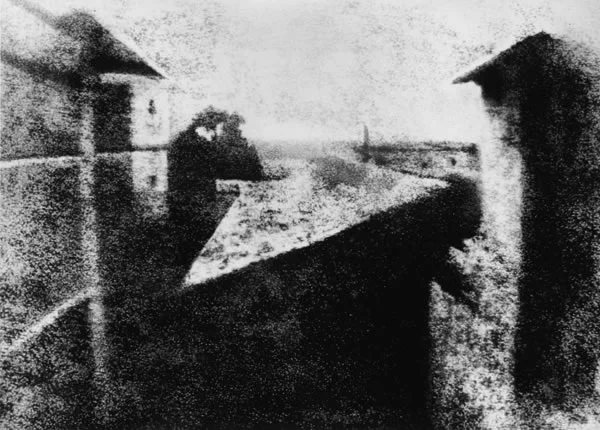
Now in order to get this image, he coated a pewter plate with a solution of bitumen he had previously experimented with. He placed it in the pinhole box (camera) and let the light hit the plate for eight hours, hardening the solution where it was touched by light. After exposing the plate, he rinsed it with lavender oil and white petroleum which washed away the bitumen that had not hardened during the eight hour exposure.
Everything from this point up to the advent of digital cameras has been a refining of this concept and process. Different chemicals were used, lenses were added to the pinhole light-boxes, and people sued each other over copyrights in an attempt to make a quick buck. The pewter plate would turn into metal tins, then glass plates, and eventually film.
It wasn't long before George Eastman's Kodak company brought a refined process to the public on an unprecedented scale. Using light weight film as oppose to heavy glass plates, they sold small film cameras which could be bought, sent to Kodak where they would be processed and printed, and sent back to the customer. Anyone born before 1995 remembers taking their photos on the little yellow kodak cameras and waiting a week to get their film developed.
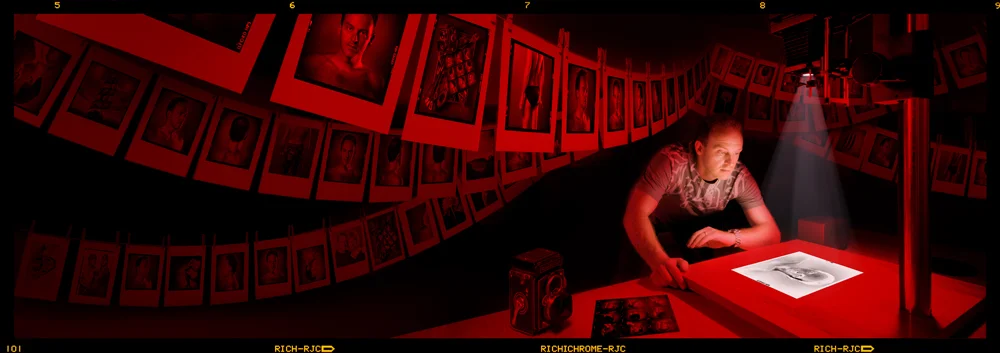
Throughout the 20th century, most photographs you see where gelatin silver prints. These were the modern film SLR cameras used by Ansel Adams, Yousuf Karsh, and even Anne Leibowitz up until digital became the norm. Think about all the old tv shows which show a young scrappy photojournalist who converted a bathroom into their darkroom. Now a digital camera works exactly like a film camera with one important difference...
Instead of film strip sitting on the back wall of our special box, a digital camera has a sensor. I wont go into the detailed process of building it, you can read about it here. But the spoiler is that Steven Sasson, a 24 year old working at Kodak, figured out how to use a Charged Coupling Device (C.C.D.) to capture an image. Instead of physically burning the image onto a light sensitive film, it is burning the image into an electronic signal through the light sensitive CCD panel.
Further and further refinement through innovations of the 21st century have led us to where we are now. Everyone these days has a camera built into their phone. The technology is only going to get better moving forward as it has been for the last century and a half.
Now a days everyone is a photographer. I hope with this blog, we can move forward by making everyone a better photographer. If you are interested in learning more about your camera or photography in general, email me or comment below!
Sources:
http://www.obscurajournal.com/history.php
http://www.hrc.utexas.edu/exhibitions/permanent/firstphotograph/process/#top

Jaw Droping 360 Pano of Night Sky!
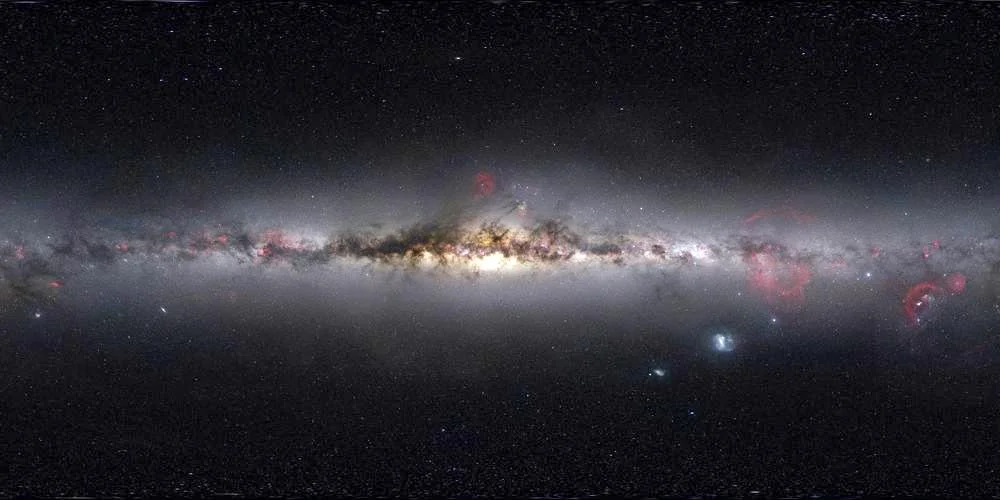
Photographer captures largest photograph of night sky ever. In order to take this, Nick Risinger had to trek over 60,000 miles across the western United States and South Africa starting in March 2010, according to PetPixel.com. You can view the original article Here.
The image is a composite of 37,000 separate images. You can view the whole interactive panorama HERE. Zoom and traverse the HD night sky in true color.
Now this is one of the most amazing endeavors I have seen in the photography world in a while. I think it deserves some credit. I don't know about some of you, but I will be gawking at this photo for some time, learning and spotting constellations around the galaxy.
Nick Risinger is actually a photographer and designer from Seattle, Washington. You may not know his name, but he is the guy behind the iPhone and iPad app "Sky Guide."
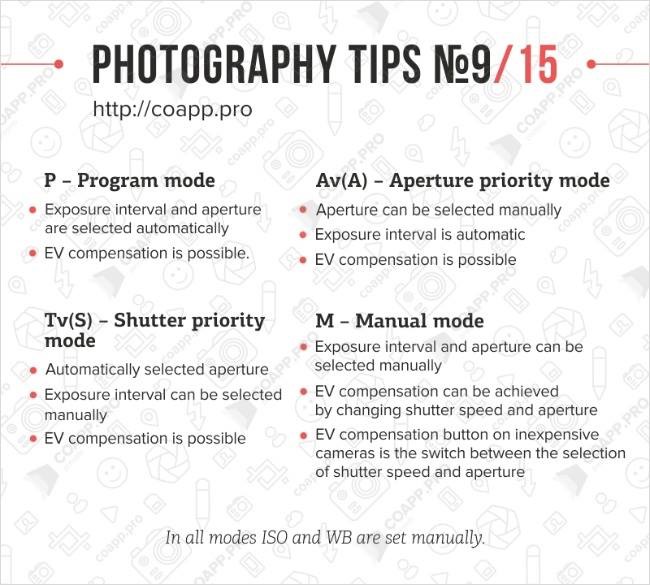
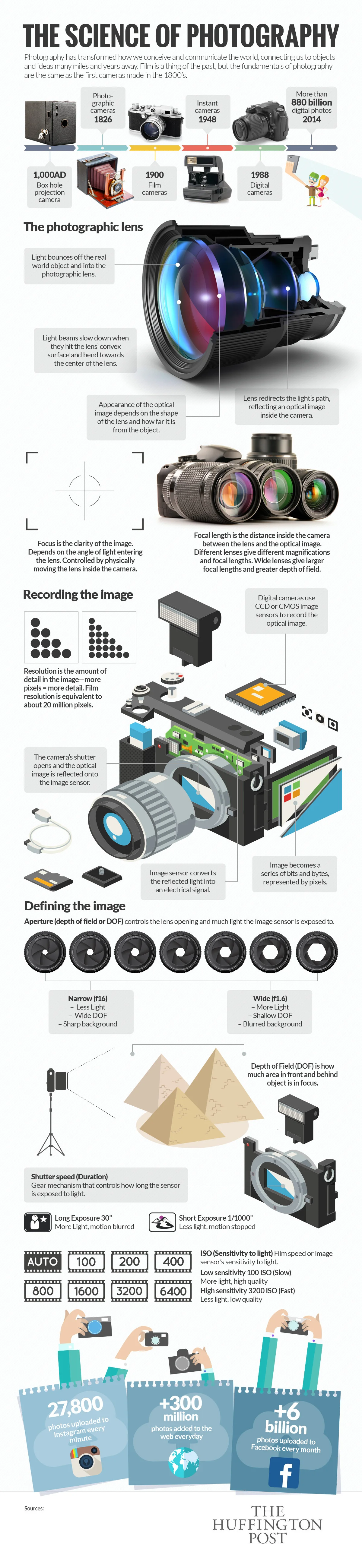
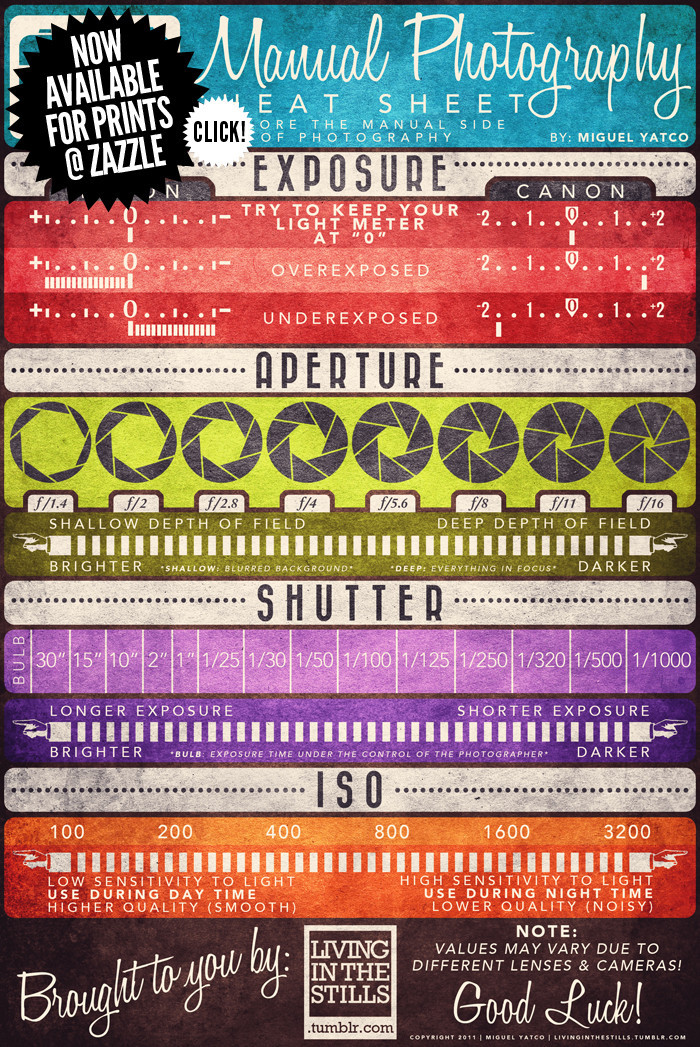
Photo Guide Infographics
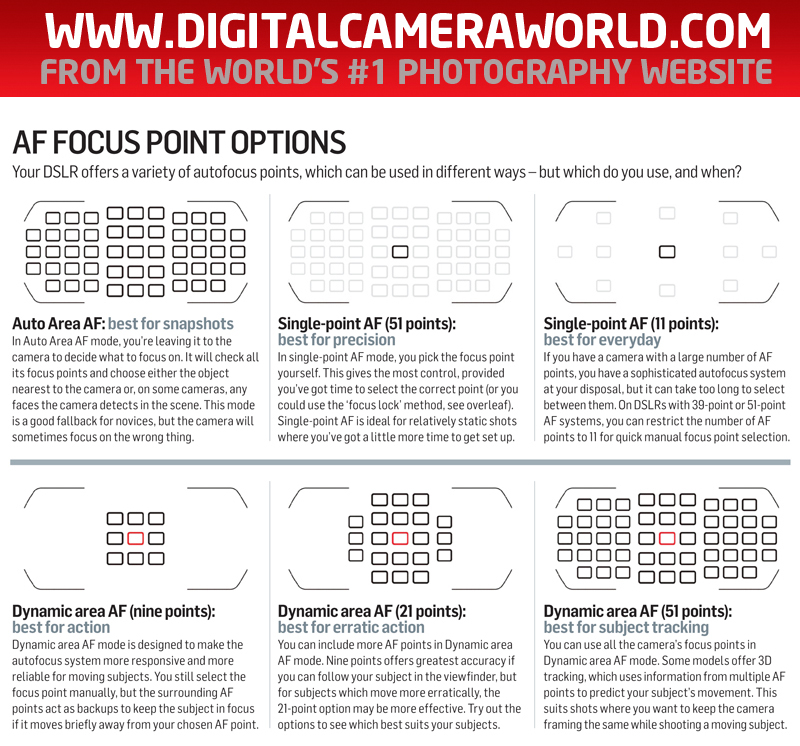
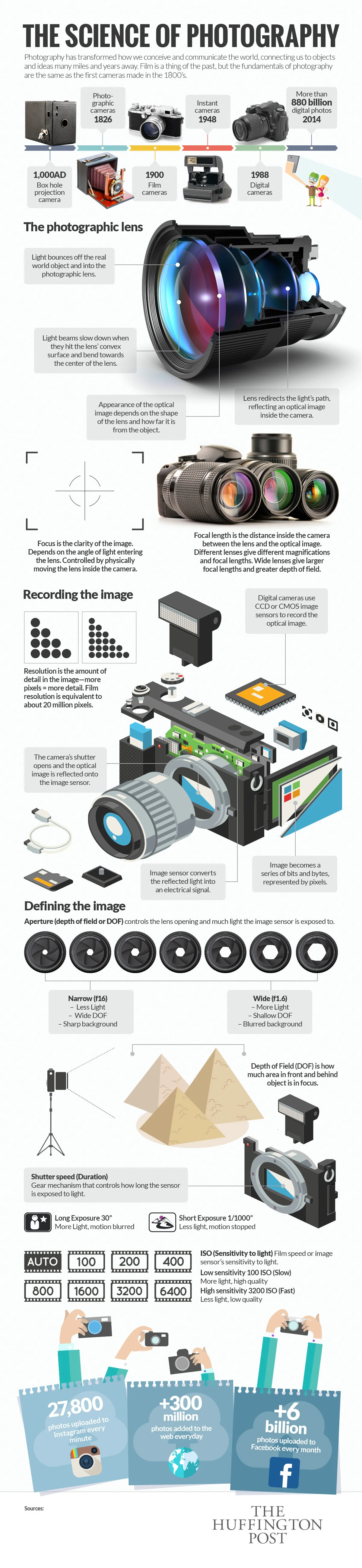
Here are some well organized infographics I found that can help you understand photography! I will be sure to keep updating as I find more.









How to find your heart in the negative(space)
This weekend we decided to go on an impromptu camping trip to the Shenandoah mountains in Virginia. Despite being caught in traffic and arriving an hour later than we expected, not bringing enough wood to cook dinner, putting the tent up wrong in the dark, forgetting a pot to boil water for coffee in the morning, it was still an amazing trip.
Nothing could go wrong that would make these views any less spectacular (well, besides maybe having no coffee, but being the resourceful wilderness explorers we are, we found a camp store that sold some). The mountains behind mountains behind mountains created a backdrop to a fantastic weekend.
After our night of epic fails, we packed up early and set out to hike a 5km journey down to some gorgeous waterfalls.
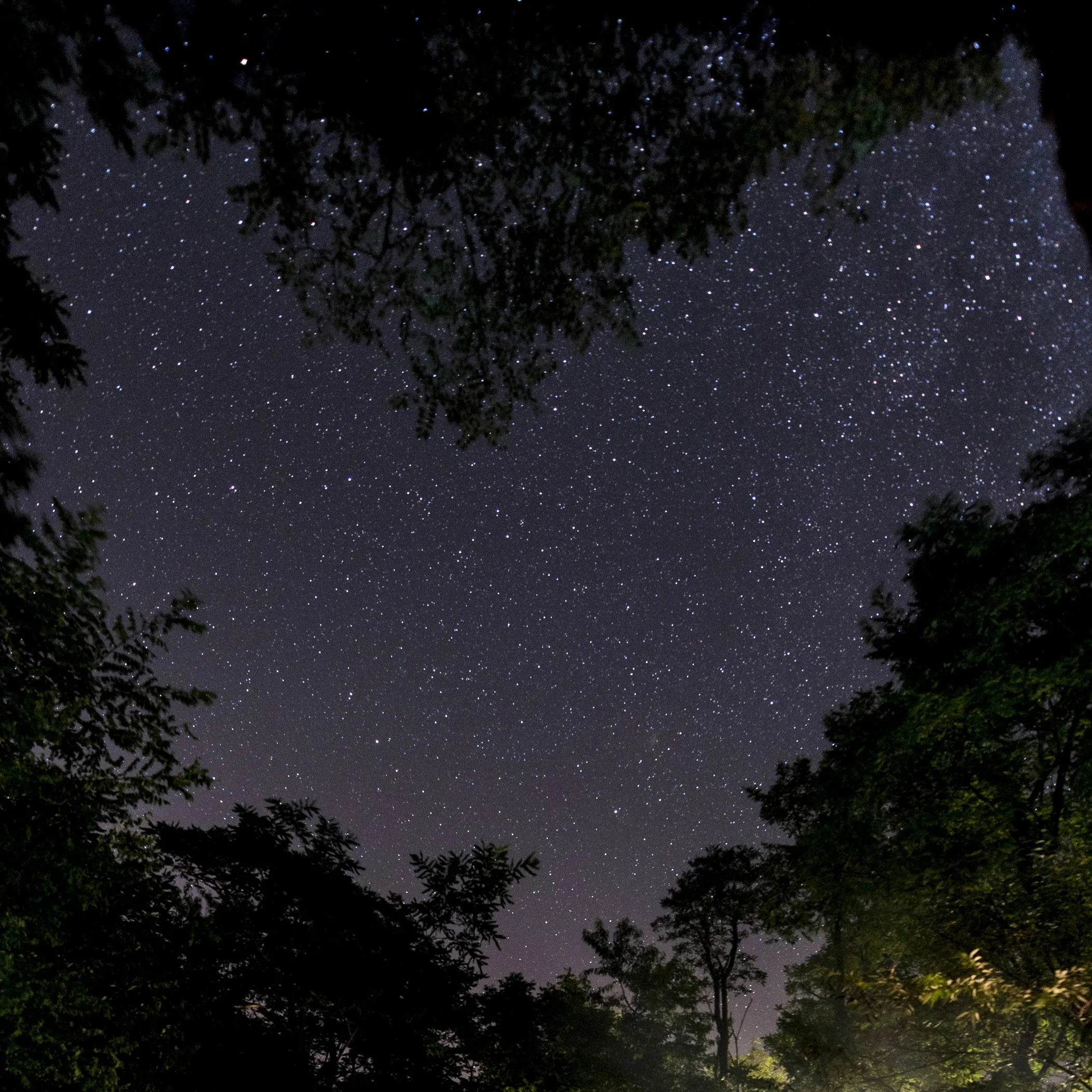
And, we never expected to see this many stars only a few hours from DC. Who could be mad about eating a balanced dinner of s'mores ( our carbs), trail mix ( some protein), and wine (err...fruit?) when looking up at a sky like that.
All in all, our trip was saved by the beauty of the Shenandoah's.